Does BRRRR Still Work in 2026? Kyle, a Pittsburgh Investor, Tells Us What It Really Takes
BRRRR still works, but the easy version is harder to find. Pittsburgh investor Kyle Reed explains what older homes, rehab surprises, appraisals, seasoning, and refinancing really look like once you have done the strategy in the real world.

Almost every real estate investor comes across BRRRR at some point.
Buy a distressed property. Renovate it. Rent it. Refinance it. Pull your money back out. Repeat.
It sounds almost too good when you first hear it!
But are those deals still actually out there?
We talked with Kyle Reed, a Pittsburgh investor who buys and renovates older homes and small multifamily properties, about what BRRRR looks like after you have lived through the contractors, old plumbing, brick repairs, surprise costs, appraisals, and refinances.
His answer is straightforward: BRRRR can still work. But the easy version people see on social media is much harder to find.
And in Pittsburgh, where much of the housing stock is old enough to hide a century of surprises behind the walls, the difference between a great deal and a painful one is often what you know before you buy.
If You Don't Underwrite the Refinance, You're Only Underwriting Half the BRRRR
It is easy to get excited about buying something cheap.
Kyle tells us, “I had to learn this the hard way. It took a couple of deals before I really understood how much the refinance matters. You can find a $100,000 property that looks like a bargain, renovate it beautifully, get a tenant in place and still end up with far more of your own money trapped in the property than you expected”.
Because the refinance does not care how much effort went into the project.
It cares about what the completed property appraises for and what the lender is willing to lend against it.
That changes the way you look at deals.
The question stops being:
“Can I buy and renovate this house?”
And become:
“Can I buy it, renovate it, refinance it, and still own a rental that makes sense afterward?”
That last part matters.
Why Pittsburgh's Old Houses Still Give BRRRR Investors Something to Work With
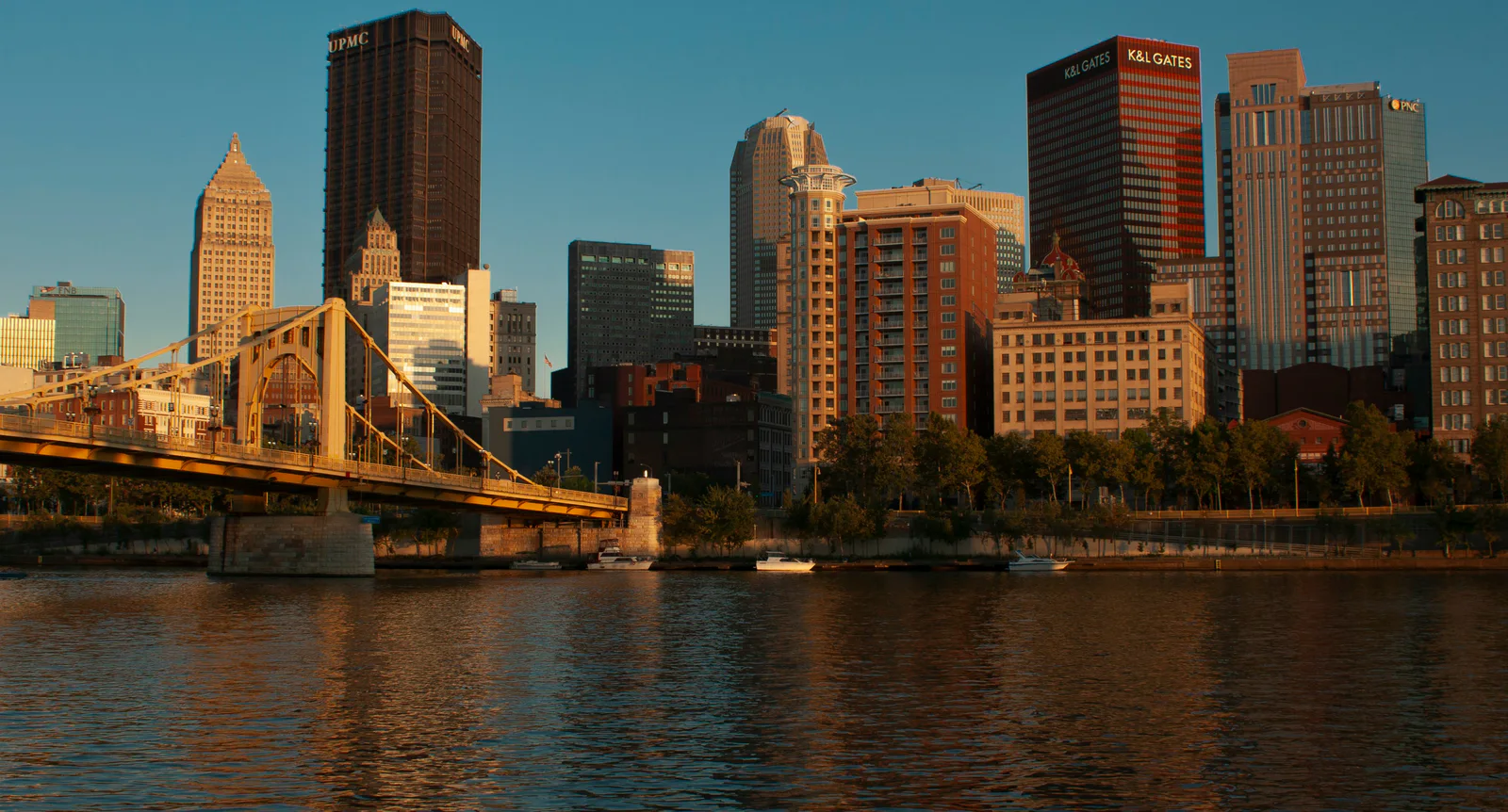
Pittsburgh is interesting because old housing creates both the opportunity and the headache.
There are still houses and small multifamily buildings where the gap between current condition and renovated condition can be meaningful.
But those properties are old.
And after enough renovations, you stop looking only at the kitchen.
“When you start, it’s easy to focus on flooring, cabinets, bathrooms, paint, the things you can see,” Kyle says. “After you’ve done a few of these, you start paying attention to the things that can really destroy the budget.”
In Pittsburgh that often means masonry.
There are a lot of brick houses. Tuckpointing that looked minor from the street can turn into a real expense once someone gets up close to the building.
Then there is the roof.
Then the mechanicals.
Electrical. Plumbing. HVAC. Sewer lines. Water intrusion. Foundations. Old work that may or may not have been done correctly decades ago.
“On these old properties, you're going to get surprises. You just want fewer of them.”
That experience changes the rehab budget.
It also changes how quickly the BRRRR happens.
A three-month project can become five months. A permit takes longer. A contractor finds another issue. The sewer needs work. The brick needs more repair than expected.
BRRRR can still work, but old houses require time.
Pretending otherwise is usually what makes the strategy fail.
Where Would Kyle Look for Deals Around Pittsburgh?
For someone starting the search today, the point is not to find a list of “best neighborhoods”.
It is to find areas where the purchase price, housing stock, renovated comparables, rent, and rehab scope still have enough room between them.
A few Pittsburgh areas worth screening include Brookline, Beechview, Carrick, Knoxville, and Brighton Heights.
They are not interchangeable, and a deal can change dramatically from one block to the next.
Brookline can be interesting because you find a mix of single-family properties and small multifamily. Beechview and Carrick can offer lower entry points in parts of the market. Knoxville can be worth watching for value-add opportunities. Brighton Heights has substantial older housing and masonry stock that can create both renovation opportunity and additional CapEx risk. You need to know your market.
For on-market opportunities, start on Zillow and watch the same areas repeatedly. The goal is not simply to see what is for sale; it is to learn what renovated properties are asking, what dated properties are asking, which listings sit, and where the spread may still exist.
For off-market leads, Facebook Marketplace and local Pittsburgh investor groups can be another source, especially for landlords, small wholesalers, and owners trying to move a property without preparing it for a traditional listing.
“You start recognizing the same types of houses and the same streets,” Kyle says. “That helps. The more deals you look at in one area, the faster you know when something is interesting”.
Knowing the area well enough that when a property appears, you can recognize whether the opportunity is real.
The Part That Can Stop the “Repeat”: Seasoning
You can buy the property.
Finish the renovation.
Get the tenant moved in.
And then discover that the lender wants you to wait!
That waiting period is called seasoning, and for a BRRRR investor it can completely change the pace of the strategy.
Some conventional cash-out refinance programs require the borrower to have owned the property for a minimum period before refinancing against its current value.
That matters much more when the investor is carrying expensive short-term financing.
If the project is done but the refinance cannot happen for several more months, interest keeps running while the investor's cash stays inside the property.
Some DSCR and portfolio lenders offer programs with no seasoning requirement or substantially shorter waiting periods than conventional financing.
Instead of finishing the project and then watching the calendar, an investor may be able to refinance against the current appraised value once the property meets the lender's requirements.
“That's the part people don't really show when they explain BRRRR,” Kyle says. “The renovation might be finished, but your money isn't necessarily available again.”
The Appraisal Is the Moment You Find Out Whether the Plan Worked
You have already spent the money.
The work is done.
The tenant may already be living there.
Then an appraiser comes in and puts value on the property.
If that value supports what you underwrote at acquisition, great.
If it comes in lower, there is not much you can do about the money you have already spent.
That is why Kyle pays attention to renovated comparable sales before buying.
“You can't just say, ‘I put $70,000 into it, so now it's worth $70,000 more.' It doesn't work like that. You need nearby sales that support the finished product”.
This is especially important in neighborhoods where the housing stock varies dramatically from block to block.
Experienced investors model different purchase prices, rehab budgets, rents, ARVs, and refinance assumptions before buying rather than discovering the sensitivity at the end.
More Cash Back Is Not Necessarily a Better Refinance
“Getting all your money back sounds great. But if you pull everything out and now the property makes almost nothing every month, you must ask yourself what you really accomplished”.
A larger refinance returns more capital, but it also creates a larger mortgage.
The larger mortgage means a larger monthly payment.
And that means less room for maintenance, taxes, insurance, vacancy, or the unexpected repair that arrives six months after the renovation is supposedly finished.
For an investor focused on scaling quickly, pulling out more money may make sense.
For someone prioritizing monthly cash flow and a larger margin of safety, leaving more equity behind may make more sense.
Neither answer is automatically correct.
The important thing is that the rental still works after the refinance.
So, Does BRRRR Still Work?
Yes, but probably not in the effortless way it is sometimes presented.
You need to buy well.
You need to understand construction.
You need to know what renovated properties support in that neighborhood.
You need enough reserves to survive an old-house surprise.
And you need to understand your refinance options before the renovation is finished.
Pittsburgh still gives investors opportunities because there is old housing, small multifamily, and properties where meaningful renovation can create value.
But finding them takes more work.
Sometimes the deal comes from Zillow.
Sometimes it comes from Facebook.
Sometimes it comes from a wholesaler, an agent, or somebody who has owned the property for thirty years and is simply done dealing with it.
The BRRRR itself is not dead.
The margin for being careless is smaller.
And for Kyle, the refinance remains the point that ties everything together.
Because buying and renovating a good rental is only the first half of the strategy.
The second half is getting enough of your capital back without turning the property you worked so hard to create into a rental you no longer want to own.